
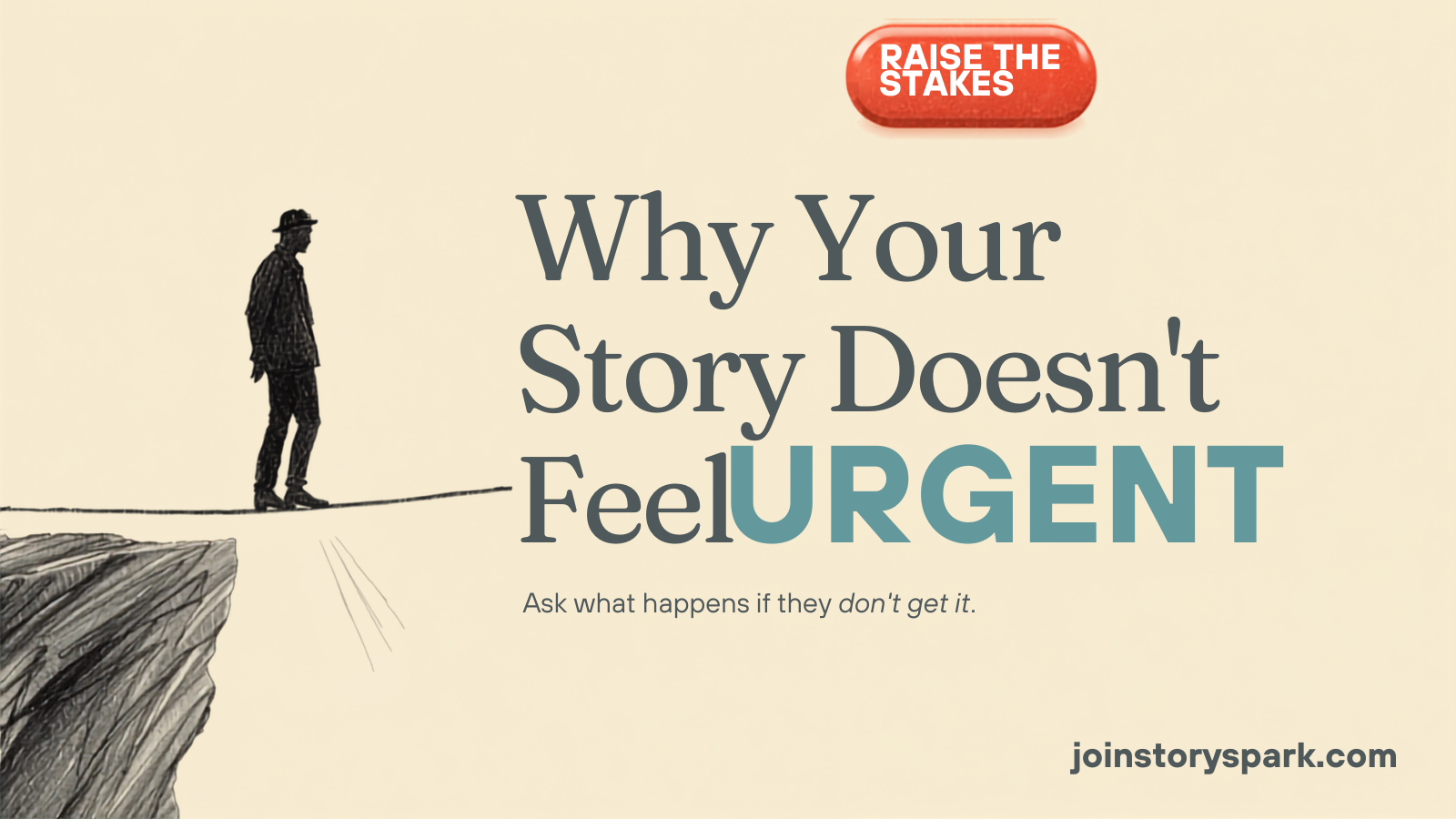
Why Your Kid's Story Doesn't Feel Urgent (And How to Raise the Stakes)
Your kid's story has a character, a problem, even a few exciting scenes — and it's still somehow... flat. Nothing feels urgent. You could read three chapters and never once worry about what happens next.
That's almost never a plot problem. It's a stakes problem — and it's one of the most common (and most fixable) issues in kids' writing.
What "Stakes" Actually Means
Stakes are simply: what happens if the character doesn't get what they want? If the honest answer is "nothing much," the reader has no reason to keep reading. If the answer is "something they truly can't afford to lose," every scene suddenly matters.
Kids often build a problem for their character (find the treasure, win the game, escape the maze) without ever answering the bigger question: why does this actually matter to them? A treasure hunt with no consequence for failing is just an errand. A treasure hunt where failing means losing the family home is a story.
Ask "So What?" After Every Goal
A simple test: after your kid states their character's goal, ask "so what happens if they don't?" If they shrug, the stakes aren't there yet.
- "She wants to win the race." So what if she doesn't? "...she just doesn't win, I guess."
- "She wants to win the race, because if she doesn't, her team loses the spot in the championship — and this is the last race before her family moves away." Now something's on the line.
Encourage your kid to keep asking "so what?" until the answer actually stings a little. That sting is the stakes.
Stakes Don't Have to Be Life-or-Death
A lot of kids think "raising the stakes" means adding a bomb, a villain with a sword, or the end of the world. That works for some stories — but it's not the only way. Stakes can be small and still feel huge if they matter to the character:
- Losing a best friend's trust
- Being embarrassed in front of the whole class
- Disappointing someone they look up to
- Losing something that can't be replaced (not because it's valuable, but because of what it means)
The size of the stakes matters less than how much the character cares. A cracked friendship bracelet can carry more weight than a collapsing kingdom if the writer shows us why it matters.
Make the Reader Feel What's at Risk Before It's at Risk
A common mistake: the stakes only show up once something's already going wrong. Instead, plant what matters to the character early, before the trouble starts. If we know in chapter one that the main character has been saving for a year to buy her mom's birthday gift, losing that money in chapter three actually hurts — because we already knew what it meant to her.
Ask your kid: what does my character care about before anything bad happens? That's the thing to threaten later.
Raise the Stakes as the Story Goes On
Great stories don't just have stakes — they have rising stakes. Each setback should make the situation a little harder, or make failure cost a little more, than the one before it. If chapter one's problem and chapter five's problem feel exactly the same size, the story has stalled.
A simple structure to try:
- First attempt — the character tries something small and it doesn't fully work.
- Bigger attempt, bigger cost — they try again, but now more is on the line.
- Final attempt, everything on the line — the biggest risk yet, right before the story's climax.
This is exactly the kind of structural thinking StorySpark is built to coach kids through — not by handing them a "correct" answer, but by asking the questions that help them find what's actually at risk in their own story and how to make it grow.
A Quick Stakes Check
Before your kid writes their next scene, have them answer:
- What does my character want right now?
- What happens if they don't get it?
- Does that answer actually matter to them — not just to the plot?
- Is this scene's risk bigger than the last one?
If all four have real answers, the scene has stakes. If any of them come back empty, that's exactly where to focus next.
Ready to help your child write stories readers can't put down? StorySpark is the first story-writing trained AI agent — a built-in tutor that asks the right questions instead of writing the story for your child. Sign up and get started in seconds.